Who is Plant Dummy?

I want give some sort of insight of who I am as a person. I understand that most people want to feel some sort of connection, or relation of who someone is behind the screen, to get a feel whether they like them or not.

Currently I am a full time college student studying business. I am a senior, who is very excited to work get further into the workforce (fingers crossed). I want to continue to build my skills when it comes to creativity, writing, and design. Creating something that is completely mine, being able to see where I started and how to improve upon it will help my editorial skills, as well as decision skills on what I think people may want or need to learn as I learn it myself.

I thought of creating of a blog a while back (at least couple of years ago) but never really deciding to take the plunge. It honestly was/is scary to me. Like what if I did it wrong, or people didn’t like me. Deciding that in my mind there was never going to be a better opportunity to do it then right now is what got me to go forward. Putting something out there that is mine, that I think would be interesting and useful for other people was the only think my mind should have been focusing on rather than the fear of failing something I never attempted.

Creating something that is unique is important to me. Having something have my personality as well as voice means a lot to me. There lot of different blogs that I see that come across as all knowing, or they are the keepers of what is right in the plant world. Plus I just like plants! Here’s one one of our (what I believe to be) White Nerve plants. Featuring a Burro’s tail peaking out in the back.
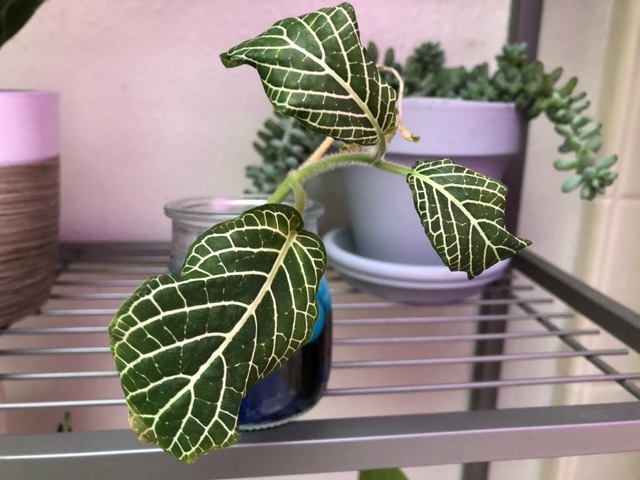
White Nerve Plant – PlantDummy

It is important to me to get information that is accurate across to the reader, however I won’t pretend like I solely know the exact truths and ways. Doing my due diligence on finding sources that are legitimate is one of my main goals.

A lot of people churn and burn blog posts to get the maximum volume. I really want to try to avoid that unless there is a part in a blog that I think needs a particular spotlight. I want to focus on quality rather than rehashing old ideas.

I realized that that I just need to do it if I think it, and just go for it. I obviously am not perfect, but I would regret not doing something like this, and building upon my skills, and knowledge that I am able to spread while learning myself. This blog may adopt things here and there that I think will add to the quality. Who knows, I may even add certain extra types of things that I enjoy writing about. Maybe even include my opinion on certain things, or just my process of how the blog is going, or what I plan to be working on in the future.

I will be back and write updates like this because I think people may want to see the me evolve and my thought process on things. Even if it is just a couple people, I think it would be good for me to be able to just have a voice for someone who may want to listen.

Thank you for reading, and as always. If you have any suggestions or things that you want to hear about please let me know. I really do take your considerations into play when I decide what I am going to write about.

Best air purifying plants for the home!

There are a lot of plants out there, most of them convert Co2 into o2. However some do it better than others, as well as filter out potentially harmful chemicals that can build up in the air

Aloe Vera:

This was a tough one, but I think that I have to choose the Aloe Vera plant because of its overall usefulness, pricing, and because it is easy to grow. 

Aloe Vera generally isn’t that expensive. You are able to  eat them if you prepare them properly (make sure your Aloe Vera plant is actually an Aloe Vera and not another type of Aloe). Another amazing thing that you are probably aware of is that you can even soothe your skin with Aloe Vera.

Aloe Vera plants tend to start off smaller, so having a couple of them may be more beneficial as far as removing toxic chemicals from the air. They help with replacing Co2 and help remove benzene from the air.

Devils Ivy – AKA Golden Pothos:

Not to be confused with the Devils Lettuce, these plants are beautiful. They can grow huge up to 8 feet long! You don’t have to worry about it getting too big and taking over your house either, you can trim the vines when they get out of hand.

Devil’s Ivy isn’t too terrible to care for either, many types of conditions are okay for them to live in. It helps purify the air of some chemicals such as Carbon monoxide benzene, formaldehyde, toluene and a few more.

This is a plant that if you have pets you need to be careful, as it is toxic to them. So definitely keep it out of reach of them.

Boston Fern:

“Boston Fern” by bfishadow is licensed under CC BY 2.0

I love ferns, they look beautiful on stands, hanging, or in the corner. Heck they look good almost anywhere you put them. Ferns in general are pretty great at reducing pollutants in the air.

According to the NASA research study in 1989 found that Ferns were one of the best at getting rid of those harmful chemicals. I would assume that there may be some people who are skeptical of the study and the effectiveness in the room. However, I personally don’t think it would hurt by having some in your room, and would like to think that it at least has some basis in helping with air quality. I can’t say for certain, but I know I love ferns and they make me happier.

NASA also had another mention of fern which is the Queen fern, and ferns in general have quite a bit of surface area. I would assume that a lot of them would be alright and have some similar qualities, but I can’t confirm or deny that part. I just love ferns and want to justify you getting some.

Dracaena reflexa:

This is a beautiful plant, you have probably seen the many different types of Dracaena’s before. However NASA mentions that the Dacaena Reflexa is one of the better ones for removing harmful things from the air. Keep them out of reach of pets, especially cats who like to nibble on plants because they can be toxic.

A fun fact is that the Dracaena is part of the pineapple family!

Rubber Plant:

The rubber plant or rubber tree, or even rubber fig plant… regardless of what you name it does it’s job. I love this plant, because of the thick beautiful leaves that drape around it. Not to mention that it does a heck of a job helping with the air quality. This is because of its large surface area from the leaves, which love to take in carbon dioxide and make quality oxygen for us to breathe in.

Be careful if you have pets because this plant can be toxic to animals.

Spider Plants:

Spider plants I feel will always have a special place in most situations in the home. They just look too good not to. In the case of air purifying, they also do a pretty good job. They give you fresh oxygen, while helping to get rid of harmful chemicals such as formaldehyde, benzene, and xylene.

They are hard to kill, cheap to own, and look good. So that is why the Spider plant makes a return on as one of my favorites. I still think that ferns are more so a favorite, but spider plants are making their way up the ladder!

As a general note:

I do want people to be cautious of what plants they have in their homes and always do your own research before putting a plant into your home. There are places available to you to search for different types of plants to see if it may be potentially harmful to your type of pet.

References and Citations:

Wolverson, C. B., Johnson, A., & Bounds, K. (1989, September 15). NASA Technical Reports Server (NTRS). Retrieved December 20, 2020, from https://ntrs.nasa.gov/citations/19930073077

Riley, E. (2018, September 18). The best air-purifying plants. Retrieved February 06, 2021, from https://www.healthline.com/health/air-purifying-plants#:~:text=Golden%20pothos%20(Epipremnum%20aureum),purifiers%20for%20removing%20common%20toxins.

Smyth, D. (2020, November 25). Information about rubber plants & cleaning the air. Retrieved February 06, 2021, from https://homeguides.sfgate.com/information-rubber-plants-cleaning-air-83674.html

8 indoor plants that are low maintenance for and Non-toxic to cats and dogs.

Keeping your pets safe from toxic plants is an important thing to do. However, how would you know what plants also look really beautiful and are non toxic? Luckily for you, I took the time out of my day to come up with a quick list. These 8 plants, are Non-toxic to dogs/cats, they look amazing, and a bonus… They are relatively easy to care for.

1.Phalaenopsis orchid:

Photo by Ylanite Koppens on Pexels.com

AKA the moth orchid. This is a wonderful beautiful option to have in your home, not only because it is safe for your pets, it is also very beautiful.. You won’t have to worry about your small fur friend getting sick because of it. However that might not stop your pet from being mean to the plant. I must suggest putting the plant in an area where your pet can’t knock it over, or chew on it damaging the plant.

2. Blushing bromeliad:

I really like this plant, it is a beautiful plant that belongs to the pineapple family, loves bright light and humidity. When it is finished blooming you can repot the pups (little starters that grow from the bottom of the mother plant) if you wish to propagate more of these beautiful plants. Blushing bromeliads usually produces more than 1 pup, so if you enjoy the plant you can easily have multiples. These plants can range in size greatly, but can be 2 inches – 1 foot tall and up to two feet wide.

3. Air plants (Tillandsia)

Photo by Paul Cuoco on Unsplash

Air plants or Tillandsia plants can be fun, as they don’t need to be rooted to anything. You can glue them to basically whatever you want that you think looks appealing. They are simple, cheap and easy to take care of. I think this would be a good first plant for a child, because of the above reasons, and they are really hard to kill. You do want to make sure that your pet won’t try to eat them though because they could be a choking hazard. You can see air plants in the store, like Lowes, or even Target. You don’t water your air plant like a normal plant, you dip it in some water to satisfy its thirst.

4. Burro’s Tail AKA Donkey’s tail AKA Sedum Morganianum

Burro’s tail is another unique plant that I love the look of. But be careful, if you move it too much the little leaves will fall off with almost no warning. The plant looks beautiful once it starts draping over the pot it sits in. From my experience are relatively easy to take care of, not requiring much, so they are a pretty decent option for newer plant owners as well. Just keep in mind to make sure your pet can’t knock it around though because it will lose some of the little leaves. I don’t think it losing some of the leaves will hurt it much. Mine has always recovered.

5. Spider plant:

This plant won’t grow legs and crawl away we promise. They look beautiful hanging, or on the ground, or perhaps an end table. Spider plants are also incredibly easy and forgiving plant. Being able to take an array of neglect. However if you want them to really like living with you, they like well draining soil first and foremost, as well as bright non directed light. If you have a skylight, or perhaps a frosted window this may be a nice option to hang one somewhere as they look wonderful hanging in a macramé holder. The spider plant won’t hurt your wonderful pet, however it may steal some attention away from them, and could get an upset stomach.

6. Bamboo (Bambusoidaea)

Photo by Elton Sipp on Unsplash

You cant really go wrong with bamboo… It is so easy to grow, it lasts forever as well as looks fantastic on a shelf, table or wherever your heart desires. Bamboo is non-toxic to dogs, cats, and even horses as far as the ASPCA is concerned. Something interesting about bamboo is how strong and resilient it is. In fact bamboo is 2-3 times stronger than timber. It’s tensile strength is also stronger than steel. Allow this plant to drain, as well as having plenty of light. Clean the container here and there to prevent unwanted algae.

7. Boston Fern

“Boston Fern” by bfishadow is licensed under CC BY 2.0

I love ferns, they just look good. Whether its in a corner, or hanging, I love them. Ferns are relatively easy to care for, just make sure the soil is damp. They love humidity, they also like a cool place with indirect light. Think of a forest floor, not too much sun, where it’s nice, cool, and damp. If the fern turns a bit yellowish, it is a good sign to increase the humidity near your plant. Another reason that I like ferns so much is because they generally have pretty decent air cleansing qualities.

The Boston fern is no danger to your cat or dog. However from my experience, my cat loves to nibble on it.

8. Basil:

I decided to add basil to the list because they are generally nice to have around the house. Especially to have some in the kitchen when you forgot to buy some from the store. They aren’t hard to grow, but sometimes they can be picky, luckily they aren’t an arm and a leg to acquire if something goes wrong. The basil plant will also be of no harm to your dog or cat.

If you suspect your pet has ingested a plant that is toxic, please call a local vet. Or if you aren’t sure, you can call the ASPCA hotline 24/7 by calling (888) 426-4435. As per their website there is a $75 fee. You can also see lists of toxic and non toxic plants on their website.

https://www.aspca.org/pet-care/animal-poison-control/toxic-and-non-toxic-plantsb

The citations and places I sourced some of my information is linked below:

Mizuno, H., Nell, Keshav, Adrienne, Denise, Johnny, . . . Common Houseplants: Details on Indoor Plants that are Low-Maintenance says:. (2020, December 02). Bromeliad care: How to grow this beauty indoors. Retrieved February 05, 2021, from https://www.joyusgarden.com/bromeliad-care/

Neoregelia. (n.d.). Retrieved February 05, 2021, from https://plants.ces.ncsu.edu/plants/neoregelia/#:~:text=They%20are%20compact%20plants%20from,when%20getting%20ready%20to%20bloom.

And thank you to the ASPCA

If any of the information that I wrote is inaccurate, please let me know.

Thank you for reading!

Common orchid issues and what to do about them.

Photo by Nicodemus Roger on Unsplash

Maybe you just got an orchid, or perhaps you have some issues that you are just experiencing with your orchid, this is common with orchids as they can be very temperamental with certain things. At a certain point something is most likely going to happen. There is no need to worry just yet. So don’t go thinking you aren’t a horrible plant owner and give up now. Being aware of symptoms, ways that you can improve/fix it will make you stress less, and your orchid a lot happier. 

 Here are a few things that could be important to know, as they are some of the more common possibilities of different issues your orchid could face. We want you to be able to have a healthy beautiful orchid like you want.

Common issues with orchids:

Root rot: Does your plant have a soft discolored (brown/blackish) root that just looks out of place? You could also be seeing some yellowing of the plant that doesn’t really look too normal. 

This means that your orchid could be exposed to too much standing water. Removing the rotted root and making sure the orchid roots aren’t sitting in standing water anymore should help this, make sure that you have a draining pot if you decide to put it in a pot leave it in a pot.

Steps in treating root rot:

  • Remove the infected roots, you can simply cut them with clean scissors.
  • Use a spray bottle with the normal 3% hydrogen peroxide that you get in the store.
  • Repot in new orchid potting soil in a drainable pot.

Purplish/yellow hue to the leaves?

Orchids are shade loving plants. So much as I thought that all plants loved all light. This is not the case. 

Your plant may naturally have a purple hue, but if your purplish yellow hue leaves could mean too much sun if it increases. If your plant looks like it might have a natural purple hue but you aren’t sure, just keep an eye on it.

They do make things called a shade house or glass house, which you can buy or even make yourself if you are the DIY type.

However not enough light can cause the orchid to have darker than normal leaves. Finding the balance that your orchid needs may take a little time, so don’t get too frustrated. Orchids generally like at least 6 hours of shaded light a day.

If your orchid gets sunburnt, which looks discolored soft or thin in a certain spot. You may want to remove that area carefully and apply a cinnamon paste to the area you cut removed to prevent infection.

Fungus and bacteria issues:

These can be spotted (no pun intended) by spots, whether it be on the flowers themselves, or the leaves. A bacterial infection can also be caused by standing water which will cause the leaf to sink in where the water was standing. It may also stink a bit.

Too high of humidity and overwatering can lead to fungus and bacterial issues. It is also good to know that the Phalaenopsis orchid/moth orchid (the kind generally sold in stores) are most comfortable around 40-60% humidity but can do a little lower if they have to. However, a lot of orchids can enjoy bathrooms, as there is usually a decent amount of humidity, and indirect sunlight. just make sure the room can get some circulation.

Phalaenopsis Orchid – Moth Orchid Photo by Jessica Knowlden on Unsplash

 A lot of  orchids prefer to have the range of humidity around 40-70%  This is why having circulation and not being too humid in a room can be good for the plant (although in my experience that seems relatively hard to do).

Steps to help fix Fungus and bacterial issues:

  • You should cut the area that is sick carefully with clean equipment.
  • Make a paste out of water and cinnamon applying to the area you cut.
  • For the leaves, using common 3% hydrogen peroxide, you can prevent rot/ fungus spread by spraying on the leaves. Hydrogen peroxide is a cheap and effective solution, especially for leaf rot because you don’t want it to spread.
  • For the roots, use a pinch of cinnamon and spread it over the root system.
  • Make sure the room the orchids are in has proper air circulation or use a fan if you have to, creating a gentle draft in the room.

I personally really like the solutions of Hydrogen peroxide and cinnamon because it is a safe, as well as natural way to treat these issues. Not to mention this solution is most likely a cheaper alternative to chemical solutions.

Thank you for taking your time to check this article out, if you have any suggestions or what you might want to be researched or talked about. Check out my contact page!

Citations and informational resources:

Growing Orchids in the Home. (2016, March 09). Retrieved from https://www.aos.org/orchids/additional-resources/orchids-indoors.aspx

Says:, N., 24, A., Says:, A., Says:, A., 22, A., Says:, C., . . . Name. (2020, June 09). 4 Quick Steps to Increase Humidity and Add Airflow for Orchids. Retrieved December 08, 2020, from https://orchidbliss.com/easy-ways-to-increase-humidity/

H. (2018, May 08). Orchid Health: Fungus. Retrieved December 08, 2020, from https://myfirstorchid.com/2016/08/12/what-is-that-stuff-growing-on-my-orchid/